
How to use this page:
To explore this page, you can either click on the links below to jump directly to specific sections or scroll down to browse and locate the information you need.
If you can’t find what you are looking for you can also enter a search term in the search bar located in the top right corner.
Overview of Needs
What you might notice
Speech
Children may:
- Have difficulties pronouncing words clearly
- Produce excessive saliva
- Stammer
- Lisp
- Be unable to say certain sounds
- Miss out sounds in a world
- Change one sound/phoneme for another
- Find longer words with more than one syllable tricky to pronounce
Expressive language
Children may:
- Not talk very much
- Have a limited vocabulary
- Misunderstanding instructions
- Use words in the wrong context
- Be selective of whom they talk to and when
- Give short answers
- Use short words
- Struggle to put words into a sentence
Receptive language
Children may:
- Have difficulties understanding and following instructions, particularly lengthy ones
- Take longer to understand what you have said
- Find it difficult to follow the storyline of a book
Social communication
Children may:
- Find making and keeping friends difficult
- Appear not to want to communicate with others
- Misunderstanding gestures and body language
- Struggle to take turns (or follow other social rules)
- Have difficulties learning, remembering and using names
- Find identifying, understanding and expressing emotions challenging
- Daydream
- Fallout with friends due to misunderstanding social situations
- Have concentration difficulties.
Strategies
Speech
- Model good speech
- Over-emphasise speech sounds
- Be careful when correcting
- Give time
- Be sensitive about public speaking
Language (expressive and receptive)
- Think about your instructions
- Use visuals to support
- Actively support vocabulary
- Check their working space
- Think about your questions
- Avoid idioms
Resources Interventions and Activities
Interventions and programmes
- Vocabulary Building – Use of word maps, semantic webs, and pre-teaching key vocabulary.
- Narrative Therapy – Storytelling frameworks like Colourful Semantics to help structure sentences.
- Receptive Language Activities – Following instructions games, barrier games, and picture sequencing.
- Expressive Language Support – Expanding utterances using sentence starters, modelling language, and scripting.
Visual Supports and AAC supports
- Choice boards
- Communication boards
- Picture cards
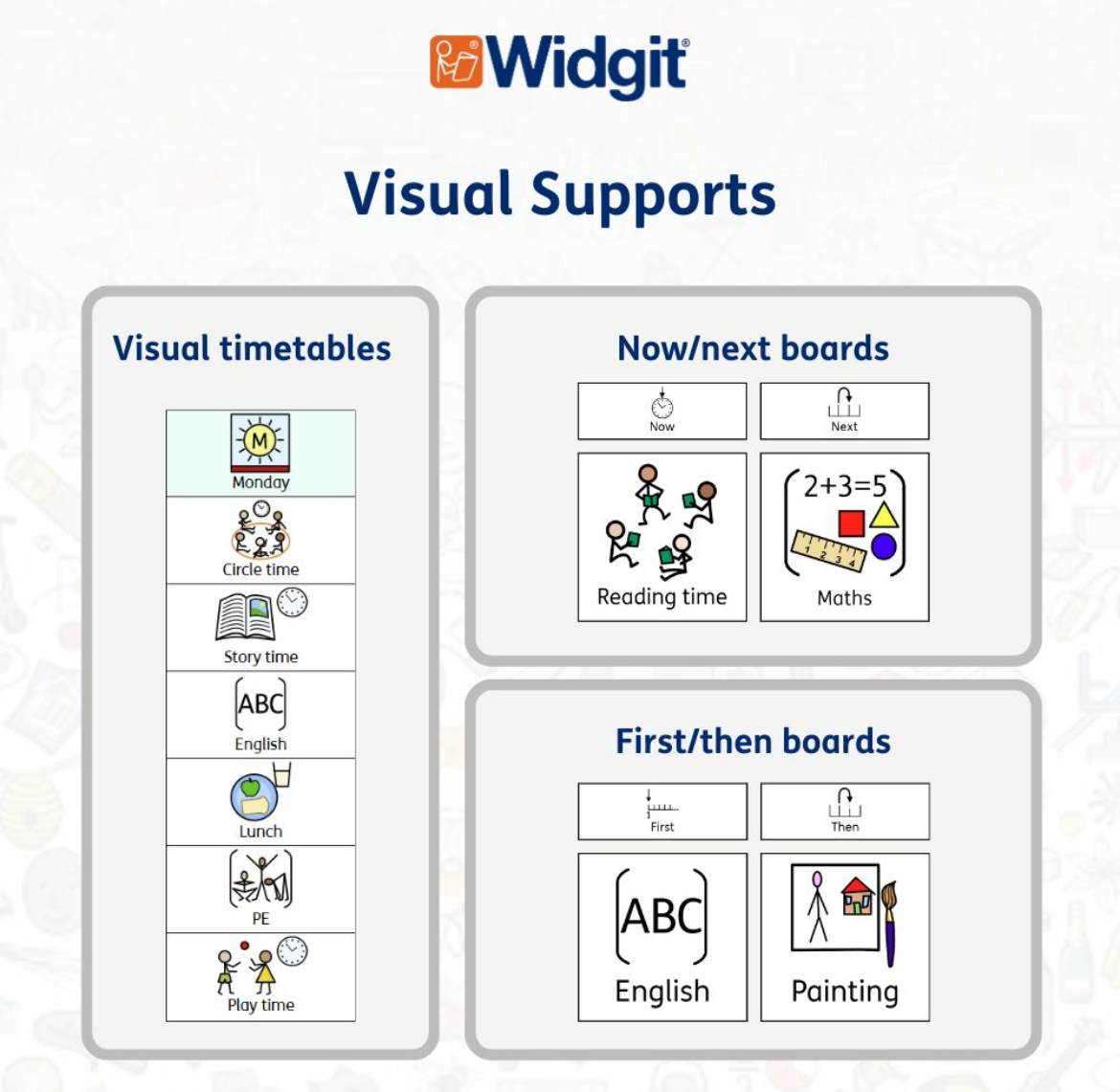
- “Now and Next” boards and “First…Then” strips
- Visual timetable
- Visual task plan
- Attention handbook Be patient Choices SLCN handbook (PDF)
Further Reading & Support
Links will open in a new tab, Word Documents will download to your device

