
How to use this page:
To explore this page, you can either click on the links below to jump directly to specific sections or scroll down to browse and locate the information you need.
If you can’t find what you are looking for you can also enter a search term in the search bar located in the top right corner.
Overview of Needs
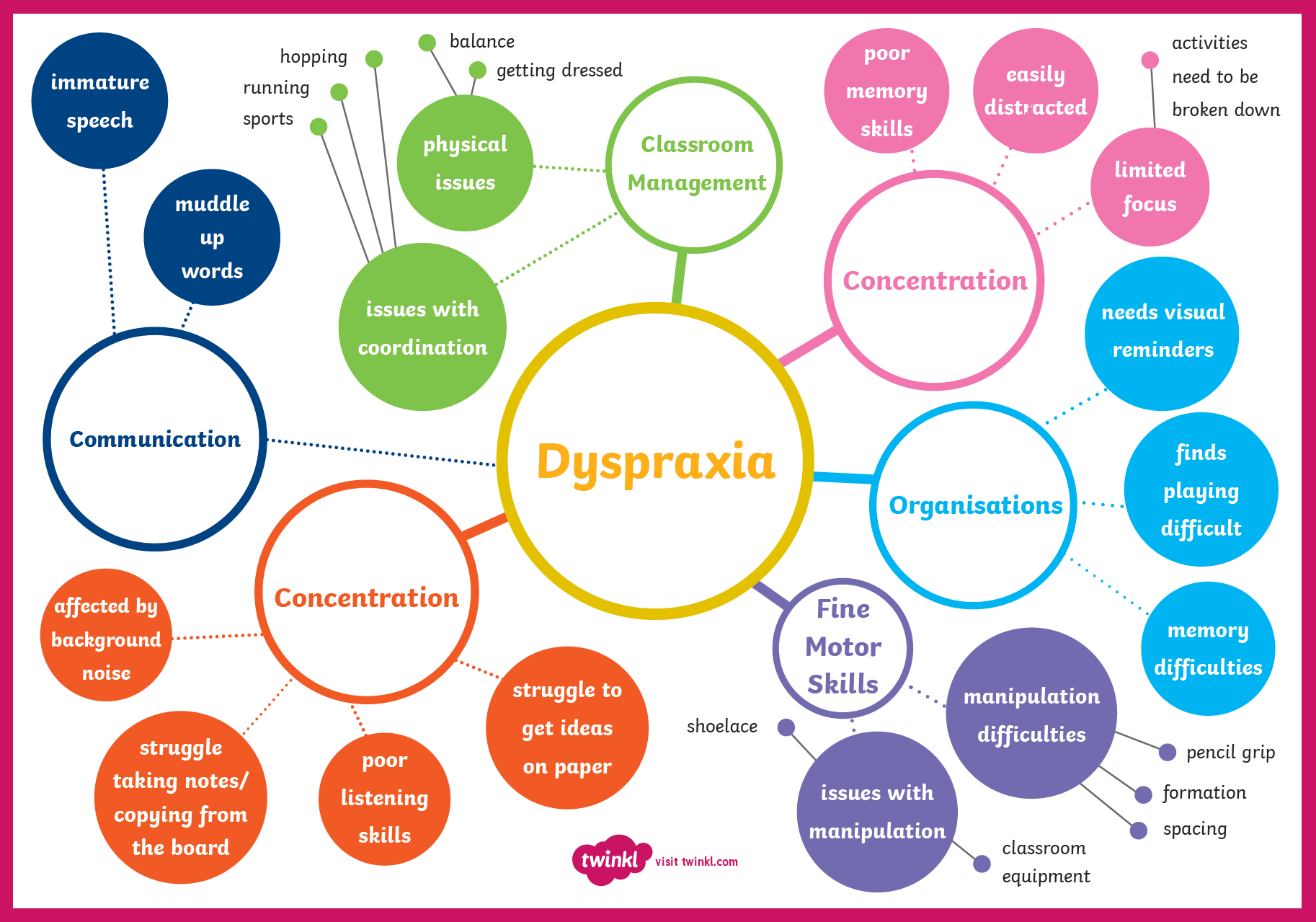
Dyspraxia, also known as Developmental Coordination Disorder (DCD), is a neurological condition affecting motor coordination, fine and gross motor skills, and sometimes social and emotional development.
It can also impact planning, organisational skills, and spatial awareness.
What you might notice
- Controlling movement/fine and gross motor skills
- Following instructions
- Limited concentration
Strategies
Physical and Motor Needs
Fine Motor Skills:
Difficulties with tasks requiring hand-eye coordination, such as writing, cutting, or buttoning clothes.
Support Needs:
- Provide tools like pencil grips or ergonomic scissors.
- Encourage activities to strengthen fine motor skills, such as threading beads or playing with clay.
Gross Motor Skills:
Challenges with balance, posture, and coordination in activities like running, jumping, or climbing.
Support Needs:
- Incorporate physical therapy to improve muscle tone and coordination.
- Allow for extra practice and breaks during physical activities.
- Use adapted equipment like larger balls for catching games.
Spatial Awareness:
Difficulty judging distances, navigating spaces, or recognizing personal boundaries.
Support Needs:
- Offer clear, structured environments.
- Use visual cues like floor markings to assist with navigation.
Cognitive and Organisational Needs
Planning and Sequencing:
Struggles with breaking tasks into steps or following instructions.
Support Needs:
- Use visual schedules, checklists, or step-by-step guides.
- Break tasks into smaller, manageable parts with clear instructions.
Memory and Processing Speed:
May have slower processing and difficulty retaining new information.
Support Needs:
- Allow extra time for comprehension and task completion.
- Repeat instructions and provide written or visual reinforcements.
Executive Functioning:
Challenges with time management, prioritizing tasks, and self-monitoring.
Support Needs:
- Teach time management strategies using timers or planners.
- Provide consistent routines to reduce stress and confusion.
Social and Emotional Needs
Self-Esteem:
Struggles in physical or academic tasks can lead to frustration or low confidence.
Support Needs:
- Encourage and celebrate small achievements.
- Focus on the child’s strengths and interests.
Social Skills:
Difficulty interpreting social cues or participating in group activities.
Support Needs:
- Use role-playing to practice social scenarios.
- Encourage structured group activities that allow participation at their pace.
Emotional Regulation:
Frustration with tasks that require coordination or quick thinking may lead to anxiety.
Support Needs:
- Teach coping strategies such as deep breathing or mindfulness.
- Provide a calm and supportive environment.
Sensory Needs
Sensory Sensitivities: Over- or under-sensitivity to sensory input, such as noise, textures, or lights.
Support Needs:
- Create a sensory-friendly environment with minimal distractions.
- Provide tools like noise-cancelling headphones or weighted lap pads.
Body Awareness (Proprioception):
Difficulty sensing their own body’s position in space.
Support Needs:
- Encourage activities like yoga or swimming to improve body awareness.
- Use weighted blankets or compression garments for grounding.
Educational Needs
Classroom Adaptations:
Standard classroom setups may not suit a student with dyspraxia.
Support Needs:
- Allow for alternative methods of completing assignments (e.g., typing instead of handwriting).
- Provide extra time for exams and written tasks.
- Seat the student in a distraction-free area.
Learning Support:
Motor coordination difficulties can impact learning in unexpected ways, such as slower reading or writing.
Support Needs:
- Offer assistive technology such as speech-to-text software or keyboarding programs.
- Use multi-sensory teaching techniques that engage multiple senses.
Independent Living and Daily Life Skills
Daily Activities:
Struggles with dressing, eating, or managing personal care due to fine motor challenges.
Support Needs:
- Teach step-by-step routines for daily tasks.
- Use adaptive tools like Velcro fasteners on clothes or built-up handles on utensils.
Transportation and Mobility:
Difficulty learning to ride a bike, drive a car, or navigate public transit.
Support Needs:
- Provide alternative mobility options (e.g., scooters, walking plans).
- Teach travel routes using simple, repetitive steps.
Emotional Well-Being
Dyspraxia can cause stress and anxiety due to constant struggles with tasks others find easy.
Support Needs:
- Offer counselling or therapy for emotional support.
- Foster a supportive network with peers, teachers, and family.
Social Integration and Community Support
Encourage participation in hobbies or clubs that build confidence without over-relying on coordination (e.g., art, music, or coding).
Foster awareness and understanding among peers to reduce stigma and promote inclusion.
Resources Interventions and Activities
Coming Soon!

