Universal Support – What Does This Mean?
Universal provision means the inclusive support and provision which is ordinarily available to every child or young person in every educational setting in Plymouth, including those with or without SEN.
The needs of most of our children and young people in Plymouth can be met by inclusive high-quality teaching using resources that are ‘ordinarily available’ in our mainstream schools or settings.

High Quality Teaching (HQT)
All pupils should be taught using High Quality Teaching. This is an approach to teaching which schools use. All children and young people make progress at different rates and learn in different ways, inclusive high quality approaches means thinking about this and teaching appropriately. Support for teachers, EY practitioners and curriculum leaders can be found in the new Ordinarily available provision guidance:
Plymouth Council – Ordinarily Available Provision for Schools by The Education People – Issuu
Plymouth Council – Ordinarily Available Provision for Early Years by The Education People – Issuu
For some children and young people, this universal support may not meet all of their needs and they will need more support than this to meet their learning goals – this is called targeted and specialist provision.
What Does it Look Like and How is it Accessed?
Support is needs-led which means that support is tailored to each child or young person’s individual needs. The support may be needed right away or at a point in the future, for short or for extended periods of time. It could include:
How is it Used?
Every school or education setting will consider the broad context of a child or young person’s circumstances when they are identified as facing difficulties or needing extra support. They will involve parents and carers to discuss barriers to learning and share strategies to help build a supportive ethos and inclusive environment, making reasonable adjustments and adaptations.
Professionals – often the school’s SENCO – will undertake baseline assessments with the child or young person and their parents and carers, to know where they’re starting from and where to focus support.
Following several cycles of Assess, Plan, Do and Review, some children and young people may need a referral to more specialist services. When a child or young person’s needs are complex, severe and long term and an education provider cannot meet their needs from within their own resources, and have sought advice from outside agencies, a statutory assessment of the child’s needs will be undertaken. Only a small percentage of children and young people with SEND will require the support of an Education Health and Care Plan (EHCP).
By improving early identification and the quality of SEN Support, we expect to reduce the need for EHCPs because the needs of more children and young people will be met without them, through ordinarily available provision and targeted in school/setting support.
What is the Process in School Settings?
What Happens in Early Years settings?
The early years are a crucial time in a child’s life, and an inclusive approach to education that engages positively with all children through fun and warmth can significantly enhance their learning journey and development. It is at this stage that children need support the most and extra support with early identification of needs can make a real difference.
In Early Years settings, each child will be assigned a key person. This person will help to ensure that every child’s learning and care is tailored to meet their individual needs, talking to parents and/or carers in supporting their child’s development at home and helping families to engage with more specialist support if appropriate.
Plymouth also has an enhanced and supported transition process when moving from nursery to school reception, and from primary to secondary school. . This makes sure that additional information about children who have been supported through the graduated approach are fully supported as they move onto the next stage of their education.
What is the inclusive Good Practice Guide?
Where inclusive learning environments and high-quality teaching are genuinely implemented within a whole school approach, all pupils will benefit. Approaches to support young people do and should vary, dependent on need and some pupils will require support that is additional to a school’s universal offer through the graduated approach.
Two Inclusive Good Practice Guides to Plymouth Inclusive Local Offer outline the expectations of mainstream schools, early years settings and wider partners to fulfil their duty by offering a fully inclusive and adaptable learning environment as a universal commitment to all pupils, in advance of targeted planning through the graduated approach.
These guides have been created to support all practitioners, including leaders, practitioners, teachers, support staff and other professionals to maximise their offer in collaboration with children, young people and their families.


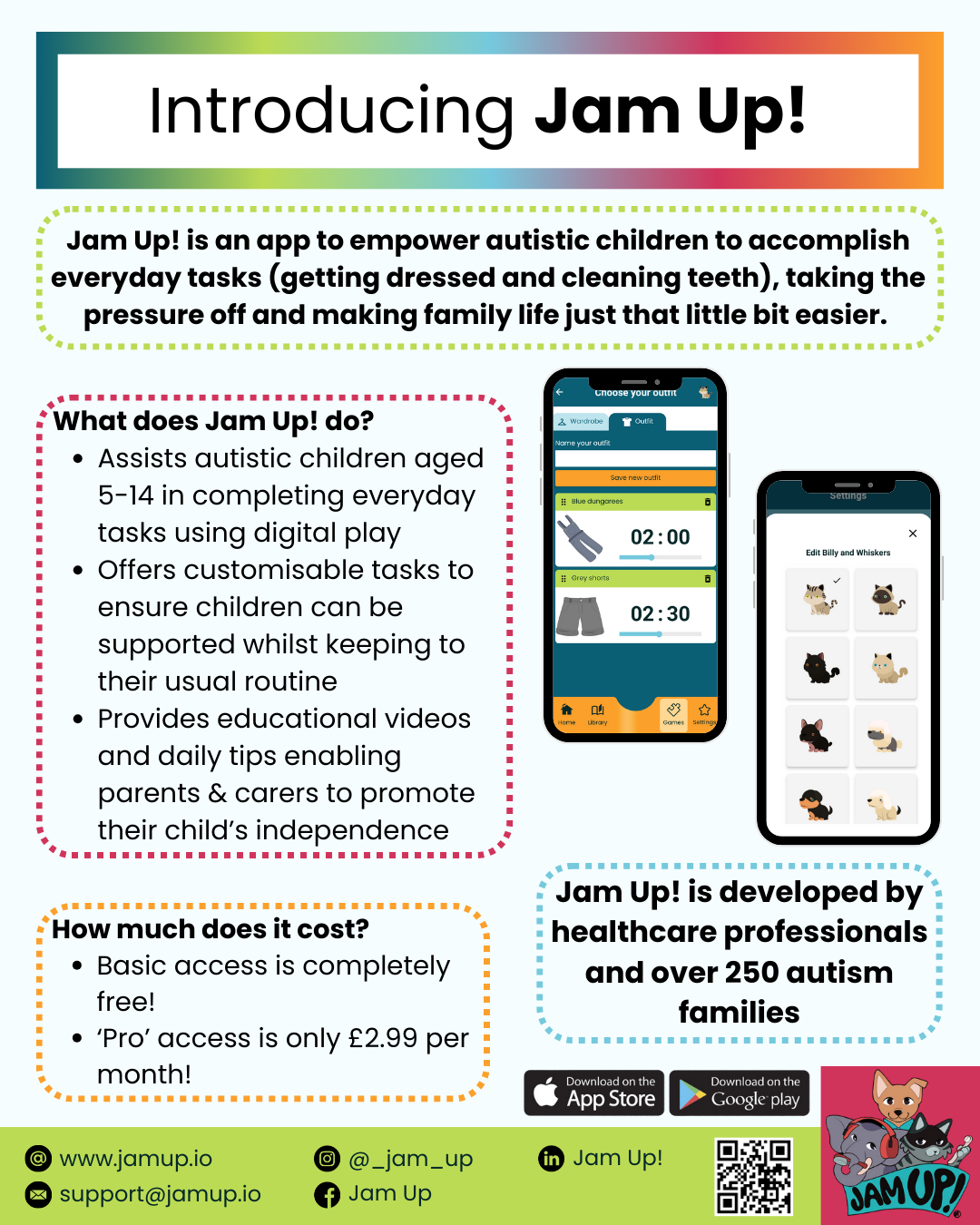
Jam Up! is a groundbreaking app designed to empower autistic children to complete everyday tasks—like getting dressed and brushing their teeth—in a fun, engaging way with the help of an adorable pet companion. Created by a parent of an autistic child, alongside healthcare professionals and, most importantly, autism families, Jam Up! is built with real needs in mind. Described as “game-changing,” it transforms daily routines into positive, rewarding experiences, making independence more achievable for autistic children.
Jam Up! Can be downloaded from the app stores or via our website www.jamup.io